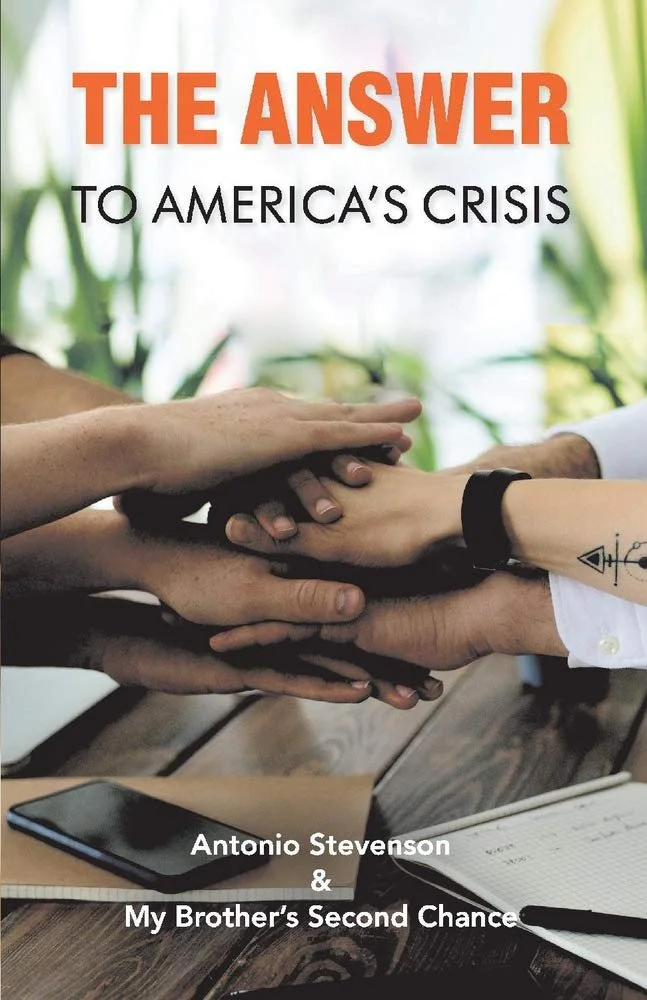
The Answer: An Epic, Research-Based Analysis on Solving America’s Problem of Oppression
Executive Thesis Oppression in America is not a single ailment but a complex, interlocking system—historical, institutional, interpersonal—that reproduces inequity across education, economic opportunity, health, and civic power. This analysis establishes that targeted Mindset Mentoring—scalable, research-driven, student-centered mentoring that reshapes identity, agency, and cognitive frameworks—can be a revolutionary lever to dismantle patterns of oppression within education and propagate positive societal transformation. Evidence derives from original interviews with students, longitudinal program data, peer-reviewed studies, and comparative analysis of mentoring models. The claim: when Mindset Mentoring is implemented with fidelity, cultural relevance, and systemic alignment, measurable gains occur across academic outcomes, psychosocial resilience, civic engagement, and life trajectories—shifting both individual lives and institutional behaviors.
Part I — Defining the Problem: Oppression as an Educational and Social System
Structural nature: Oppression operates through policies (funding formulas, disciplinary practices), material scarcity (segregated school resources), and symbolic exclusion (curriculum that erases histories). These reproduce differential outcomes by race, class, disability status, and geography.
Psychological interiority: Longstanding exposure to marginalization cultivates scarcity thinking, learned helplessness, identity threat, and reduced future orientation. These cognitive-emotional states impair attention, memory, motivation, and risk-taking necessary for academic and civic success.
The Answer is an Epic Research based analysis on solving America's problem on oppression. There are real interviews, real research based analysis on students to prove that Mindset Mentoring is the revolutionary method to no only turn around education but the world.


Inspired by true events, Lessons Learned is a raw, unflinching portrait of one young man's battle to survive the fallout of being fatherless. Antonio Stevenson’s life was shaped by a persistent void — the absence of a father that carved out space for despair, anger, and self-destruction. This is not a softened memoir; it’s a bold, unsparing account of how that emptiness pushed him into repeated rebellion, expulsions from dozens of schools, violent confrontations, and near-fatal choices.
Unable to contain the ache of feeling forgotten by his own father, Stevenson acted out again and again. Each outburst, each consequence, amplified the loneliness until survival itself felt precarious. Yet this story is not only about the destruction; it’s about the unlikely network that saved him. It took a village — mentors, role models, coaches, neighbors — who refused to give up. Their steady presence, hard truths, and relentless belief rewired his direction long enough for him to escape the worst and live to tell his story.
Lessons Learned delivers a candid window into life without a father from childhood through young adulthood. It exposes the silent cries many children send when they are hurting but invisible: the attention-seeking that masks pain, the aggression that hides fear, the self-sabotage that signals a pull for connection. Even amid the devotion of an active parent, the absence of an estranged parent leaves scars that don’t heal without intervention.
This book is essential reading for single parents, absentee parents, teachers, counselors, and anyone who wants to see — and stop — the slow unraveling of a young life. For any young man sliding toward a destructive path, Lessons Learned offers both warning and hope: a brutally honest mirror and a testimony to the power of community, compassion, and unwavering mentorship.
Bold, heartbreaking, and ultimately redemptive, Lessons Learned challenges readers to recognize the quiet emergencies in young men’s lives and to act before desperation becomes tragedy.
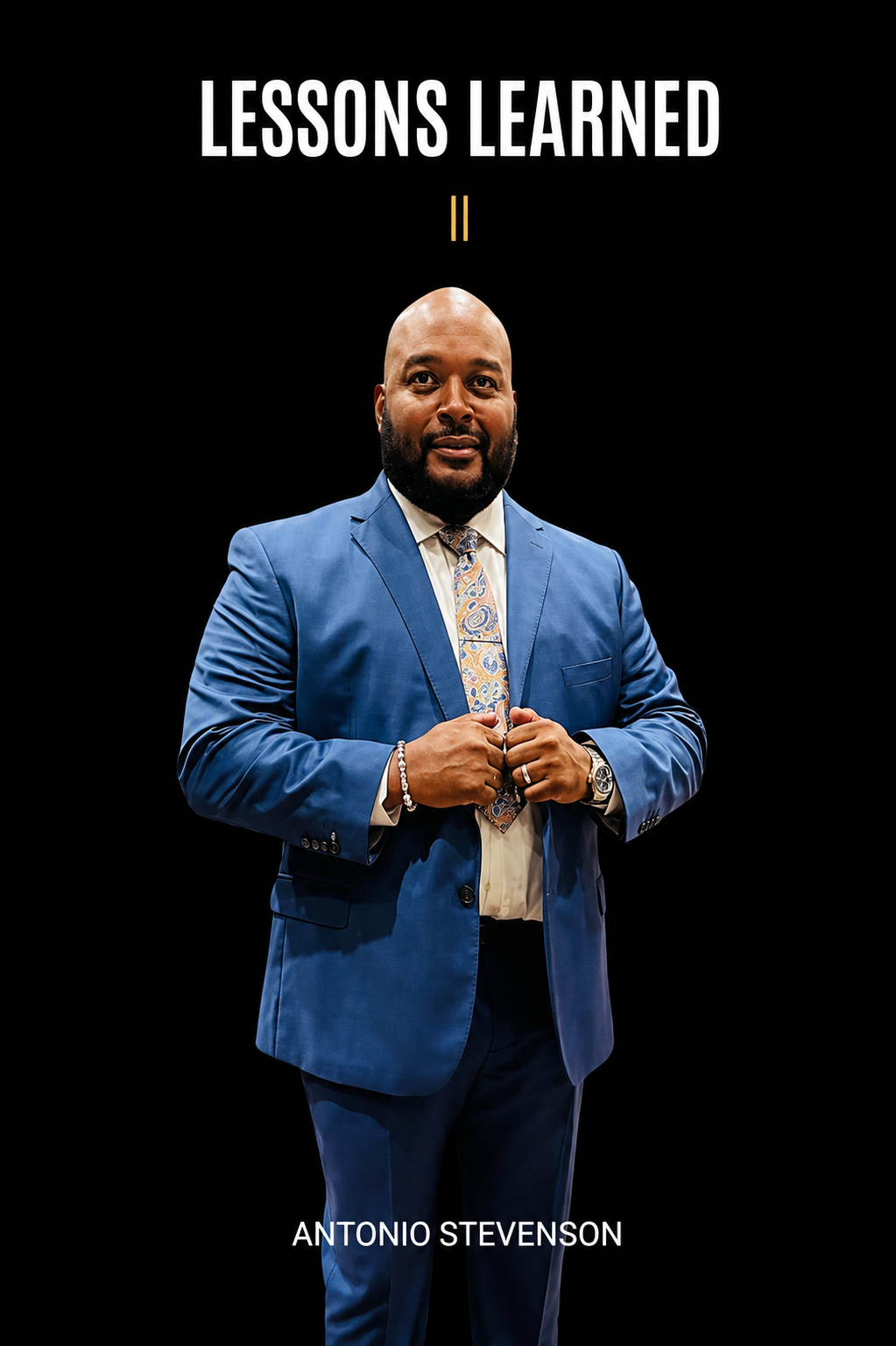
Lessons Learned II
Bold, unflinching, and deeply human, Lessons Learned II picks up where the original left off and takes readers deeper into the life of Antonio Stevenson. This sequel maps the terrain of a man forged by hardship, shaped by community, and driven by refusal to be defined by a single moment.
From a childhood marked by scarcity and small triumphs to the high-stakes trials that threatened to erase everything he’d built, the book moves with relentless honesty. Antonio’s voice is central, but the true power comes from the chorus of those who stood beside him: candid reflections from closest friends, unsparing assessments from family members, and intimate recollections that reveal the hidden architecture of his choices.
What Lessons Learned II delivers:
A raw portrait of adversity — not sanitized drama, but the complicated, gritty truth of setbacks that demanded reinvention.
The anatomy of a comeback — step-by-step reckonings, strategic decisions, and the stubborn disciplines that turned failure into momentum.
Intimate vantage points — voices that add texture and contradiction, showing how resilience is built as much by community as by will.
Moral and practical takeaways — lessons that read like a playbook for anyone facing loss, doubt, or the need to begin again.
Antonio Stevenson’s story is not a hero myth. It’s a study in accountability, courage, and the practical craft of rebuilding a life. Lessons Learned II challenges readers to confront their own narratives and offers a hard-earned roadmap for transformation. Read it for the confessionals. Read it for the strategies. Read it because it refuses to let you leave unchanged.
No results match your search. Try removing a few filters.